Vale Farmers' Markets Compared: Which One Fits Your Saturday Shop?
Saturday morning, and the boot of the car is empty. Four markets sit within a short drive of most Vale doorsteps, and they are not interchangeable. One is built for a full weekly shop, another for a slow coffee and a natter, and a third you can be in and out of before the car park fills. What follows is a straight comparison on the things that actually shape your morning: what's on the stalls, where you park, whether the dog can come, when to turn up, and what the place feels like once you're there.
A word first, and it matters: market days move. Some run weekly, some monthly, and a few shift indoors or cut their hours in winter. Check the organiser's latest update or the town council's page before you set off. Turning up with a cool bag and an empty Saturday is a small tragedy, and an avoidable one.
Cowbridge: the polished, busy one
Come here when you want the whole shop in one go. The line-up usually runs to proper butchers, a cheese stall, bread, seasonal vegetables, preserves, pies and a couple of hot food vans, and the standard is consistently high. The trade-off is company. This is the busiest of the Vale markets, and by mid-morning the pavements near the high street are full.
Parking is the thing to plan. Use one of the town's pay-and-display car parks and walk in rather than circling for a space near the stalls. Arrive before half nine and the whole trip feels easier.
Dogs: welcome on leads outside, but keep them close in the crush and don't assume they can go inside any covered area.
Best for: a serious shop, a gift, or showing visiting family what the Vale does well.
Barry: the biggest and the loudest
If you like options, Barry wins. Think more stalls, more variety, and more chance of picking up something you didn't come for — fish, plants, street food, bakery, and a rotating cast of guest traders. It's a good bet for families, because there's usually something to eat and something to watch while you decide.
Parking is more generous than Cowbridge, though the town centre car parks still fill fast on market Saturdays. If you're within reach of a train, take it. You'll arrive calmer and you won't spend the last ten minutes of your trip queuing out of a multi-storey.
Dogs: fine in the open-air sections, though a crowded pitch next to a hot griddle isn't the kindest place for a nervous dog.
Best for: bigger shops, browsing, and a morning that rolls into lunch.
Llantwit Major: the quiet one that rewards a slower look
The smallest of the four, and the one that pays you back for lingering. Fewer stalls, but often a stronger showing from growers and small producers within a few miles — eggs, honey, vegetables in season, cakes, and whatever has just been made that morning. You'll get talking to people. That's part of the point.
Parking is easier and the walk is short, which makes it a sensible choice with a buggy, a toddler, or a dog that likes a bit of room. It's also the market least likely to leave you queuing.
If you're doing a big shop you may find gaps. If you're topping up for the week and would rather not battle a crowd, this is your one.
Best for: a relaxed top-up, meeting neighbours, and slower Saturdays.
Penarth: the weekend wander
Penarth draws a walkier crowd and leans towards coffee, pastries, bread and lunch rather than a full larder. It's a pleasant hour: a wander, a decent flat white, a browse, then home along the front. Ideal if you're buying for the weekend rather than the week ahead.
Parking is the weak spot. The town centre and seafront car parks are busy at the best of times, so come early or walk down if you can. On-street space near the market is limited, and circling for it is rarely worth the temper.
Dogs: this is the most dog-heavy crowd of the four — good news if yours is sociable, less so if it isn't.
Best for: coffee, brunch, browsing, and a weekend treat.
At a glance
- Full weekly shop: Barry, then Cowbridge
- Produce straight from nearby growers: Llantwit Major
- Coffee and a wander: Penarth
- Atmosphere: Cowbridge for bustle, Llantwit Major for chat
- Easiest parking: Llantwit Major
- Most dog-friendly: Penarth and Llantwit Major
- Arrive earliest: Cowbridge and Barry
Dogs, parking and the other practicalities
Dogs
Most of these markets are open-air, so a well-behaved dog on a short lead is usually welcome. The rules that catch people out are the covered bits: indoor halls, marquees and food preparation areas, where dogs generally can't go. Take a second person if you want to browse both sides of a hall. In a crowd, keep the lead short and mind the hot-food stalls. If your dog is uneasy around people, the smaller markets are kinder places to be.
Parking
Every one of these markets is easier before 10am. After that you're competing with the weekly shop, the coffee crowd and everyone else who had the same idea. Charges and time limits apply in the town car parks, so read the machine rather than gambling on a yellow line for the sake of ten minutes.
Timing, cash and bags
Traders set up early and sell out early. The best loaves and the last of the seasonal vegetables go first, so a mid-afternoon arrival means picking over what's left. Keep some change in the car as a backup, even though most stalls now take cards.
Do a lap before you buy. Prices vary more than you'd expect between pitches, and one walk round tells you what's actually good that week.
If you're buying for someone with a food allergy, ask the stallholder directly about ingredients and how things are prepared. Market kitchens aren't always labelled the way a supermarket aisle is, and a two-minute conversation is worth having.
Which one fits your Saturday?
Match the market to the trip. Want the week's food in one go? Barry or Cowbridge, parked by half nine. Want a quiet top-up and a chat? Llantwit Major. If Saturday is really about a coffee and a wander, head for Penarth.
One habit worth keeping: ask a stallholder what they'd buy. You'll learn what's in season, what's just come in, and what to do with it. Then buy one thing you hadn't planned on. Before you leave the house, check the market is running that week — dates shift, and the difference between a good Saturday and a wasted one is usually a two-minute look at a calendar.
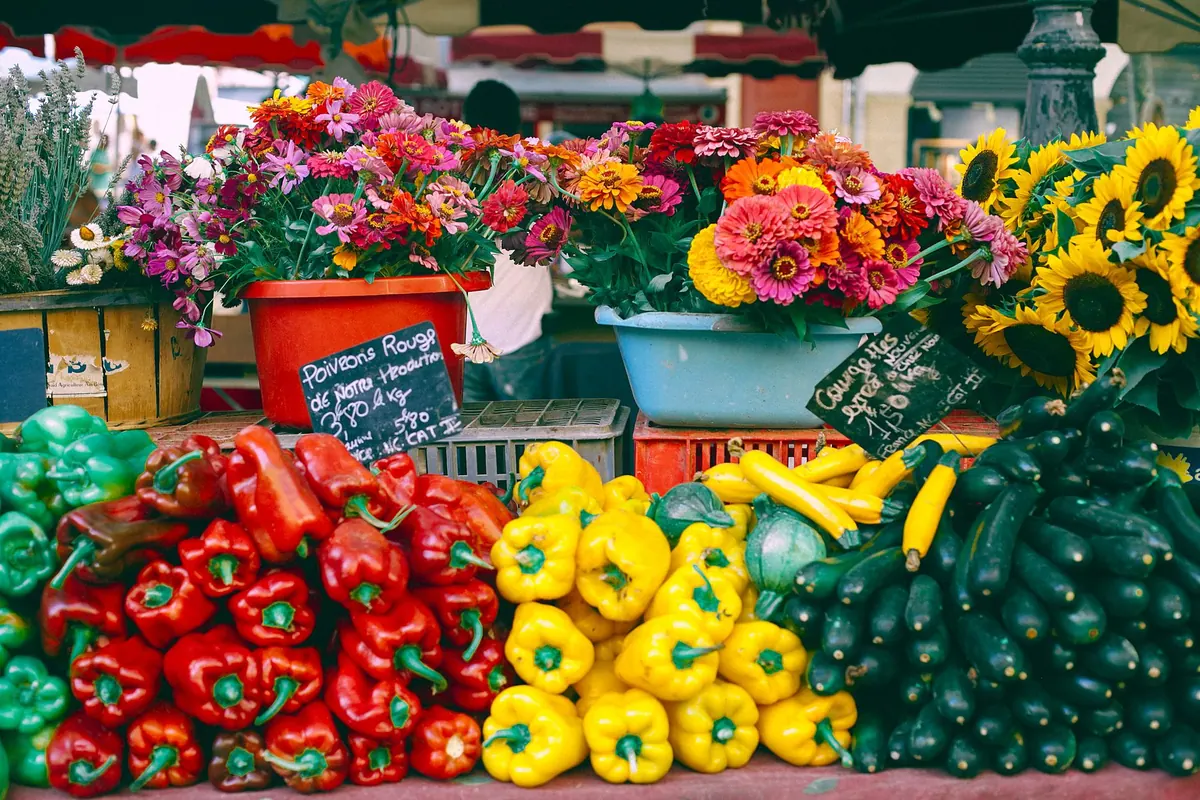
Photo: Maria Orlova / Pexels