Beginner's Guide to Walking the Vale Heritage Coast: Routes, Tides and Kit
The Vale Heritage Coast runs from Aberthaw east to Ogmore-by-Sea, and it packs an improbable amount into a short stretch: limestone cliffs, shingle bays, wooded valleys that drop down to the sea, fossils in the rock and a lighthouse you can walk right up to. It is also a coast that punishes a casual approach. The tide moves quickly, several of the steps down to the beaches are steep, and the cliffs are soft enough to crumble without warning. What follows is what you actually need to know before your first walk.
Reading the coast before you set off
The coastline is a series of headlands with sandy or pebbly bays between them, linked by a cliff-top path that forms part of the Wales Coast Path and is waymarked with the acorn symbol. Almost every bay has a valley behind it — Cwm Col-huw at Llantwit Major, Cwm Nash at Monknash, the wooded dip at Dunraven. These valleys are the access points, so when you look at a map, the shape of the coast tells you where you can get down to the beach and where you cannot.
The rocks are worth a look: limestone full of shells and crinoid fragments, with shale bands between. Much of it sits within a Site of Special Scientific Interest, so please look and photograph rather than hammering anything out of the cliff face.
Tides: the one thing to plan around
The Bristol Channel has one of the largest tidal ranges in the world, and the Vale coast feels it. Water that is a hundred metres away at low tide can be against the cliff within a couple of hours, and on the flatter beaches at Ogmore and Llantwit Major it moves across the sand faster than most people walk.
Three habits will keep you out of trouble:
- Check a tide table for the day you are walking — Barry, Porthcawl or Watchet are all close enough to be useful — rather than relying on what the tide did last weekend.
- Walk on a falling tide where you can. A beach that has just emptied gives you the maximum window, and you can turn round early without drama.
- Know your way back up before you commit. Count the valleys and steps as you pass them, so you always know how far it is to the nearest exit.
If the plan depends on crossing the base of a cliff or walking a long beach at the wrong end of the tide, do the cliff-top path instead. The views are better anyway.
Routes for a first visit
Dunraven Bay to Southerndown
Short, dramatic, and easy to bail out of. Park at Dunraven Bay, drop onto the beach if the tide allows, then follow the cliff path east towards Southerndown. There are steps and a few steep pulls, but nothing that requires experience. Allow an hour or so, and finish with a cup of tea near the car park.
Nash Point to Monknash
Probably the best introduction to the coast. Start at the Nash Point car park beside the lighthouse, follow the cliff path west, then drop into Cwm Nash and walk inland to Monknash for a pub lunch. The return is a gentle climb back up the valley. Mud after rain is the main nuisance, so wear something with grip.
Llantwit Major beach to Nash Point
A longer half-day walk of roughly four miles each way. The steps down to the beach at Cwm Col-huw are steep, and the beach itself is the section most sensitive to the tide, so time this one properly. Once you are up on the cliff top, the going is straightforward, with fine views back towards the lighthouse.
Ogmore-by-Sea and Merthyr Mawr
Different in character: sand dunes, estuary views and a broad beach rather than cliffs. The river mouth is the part to treat with respect — currents are strong where the Ogmore meets the sea, and the sand can be soft. Keep to the marked paths through the dunes.
Access points and parking
Main car parks sit at Dunraven Bay, Nash Point, Llantwit Major beach, Monknash and Ogmore-by-Sea. Some charge, especially in summer, and the popular ones fill by mid-morning on a sunny weekend. Toilets are limited to the bigger sites, so plan accordingly. Several villages are served by local buses, but services are thin on Sundays and in winter, so check times before you commit to a one-way walk. Mobile signal drops in the wooded valleys and in some of the bays, so download an offline map rather than assuming you can look up the route halfway down a cliff.
What to wear and carry
- Footwear with real grip. Trail shoes are fine in dry weather; boots are better when the valleys are muddy. Smooth-soled trainers are a poor choice on wet limestone.
- A waterproof jacket, even on a bright forecast. This coast catches weather coming up the Channel.
- Layers rather than one thick item, plus a hat in winter.
- Water and a snack. There is nothing between the bays.
- A charged phone and a power bank, plus a paper map or an offline app.
- Sunscreen and a hat in summer. There is very little shade on the cliff top.
- A lead for the dog, and expect livestock in the fields above the coast.
Hazards that catch people out
The cliff edge is the first one. Grass at the lip is often undercut, so stay several metres back and keep children and dogs close. Wet limestone and wet wooden steps are genuinely slippery; take the descents slowly and use the handrails where they exist. Adders and ticks are present in rough grass and dunes in warmer months, so covering up is sensible. There are no lifeguards on these beaches and the currents are strong, so treat swimming as a separate decision rather than something you fit in at the end of a walk.
If you do need help, call 999 and ask for the coastguard. Give them the nearest named bay or car park — on a coast like this, that will get them to you far faster than a description of the view.
Building good habits
Check the tide and the weather the night before, tell someone where you are going and when you expect to be back, start earlier than you think you need to, and turn round when the tide turns rather than pushing on to the next bay. If you are unsure about the state of the beach, take the cliff path. And if steep steps or a few miles of uneven ground sound like hard work, mention it to your GP before you go — there is no shame in choosing the flatter sections until you have built up to the longer ones. Get those basics right and this coast will repay you for years.
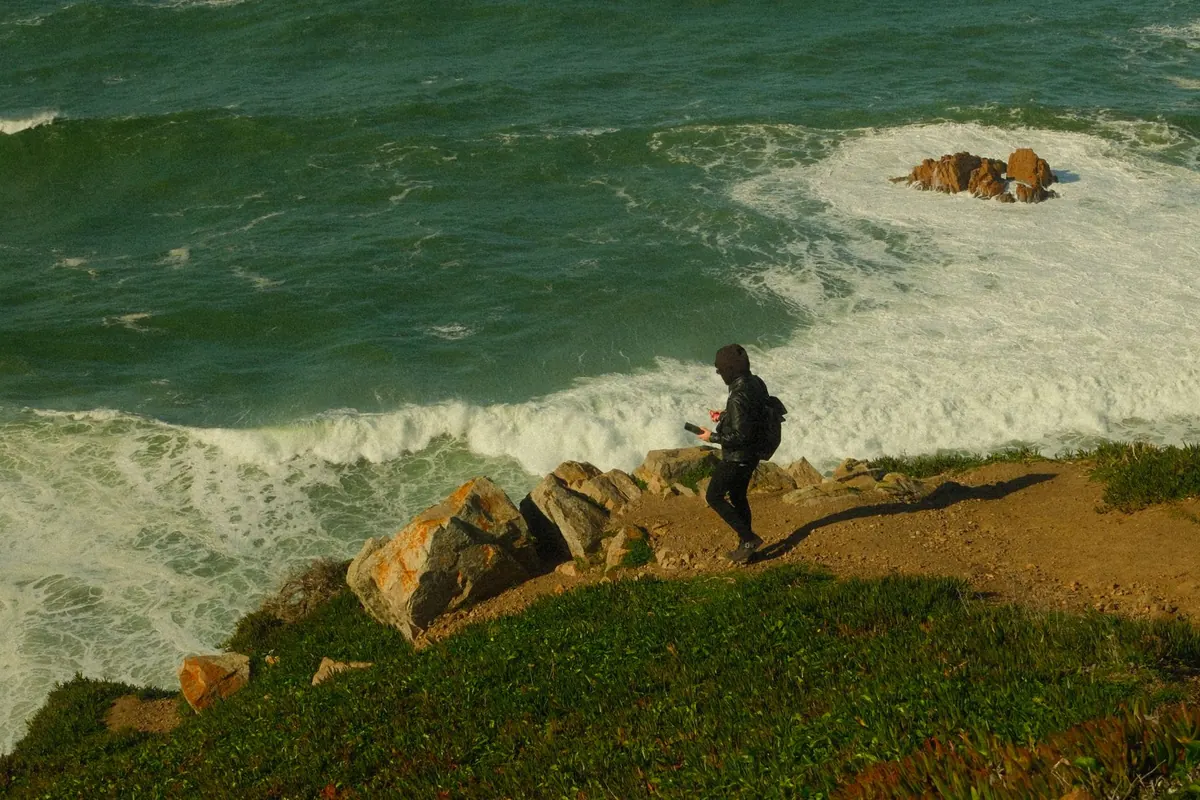
Photo: Alyona Nagel / Pexels